Long-term observations
Multi-year flux and concentration records create a robust urban–Alpine reference dataset.
Urban air quality & trace-gas fluxes
We investigate how traffic, buildings, energy use, chemistry, turbulence and Alpine topography shape atmospheric composition above Innsbruck.

Why direct observations?
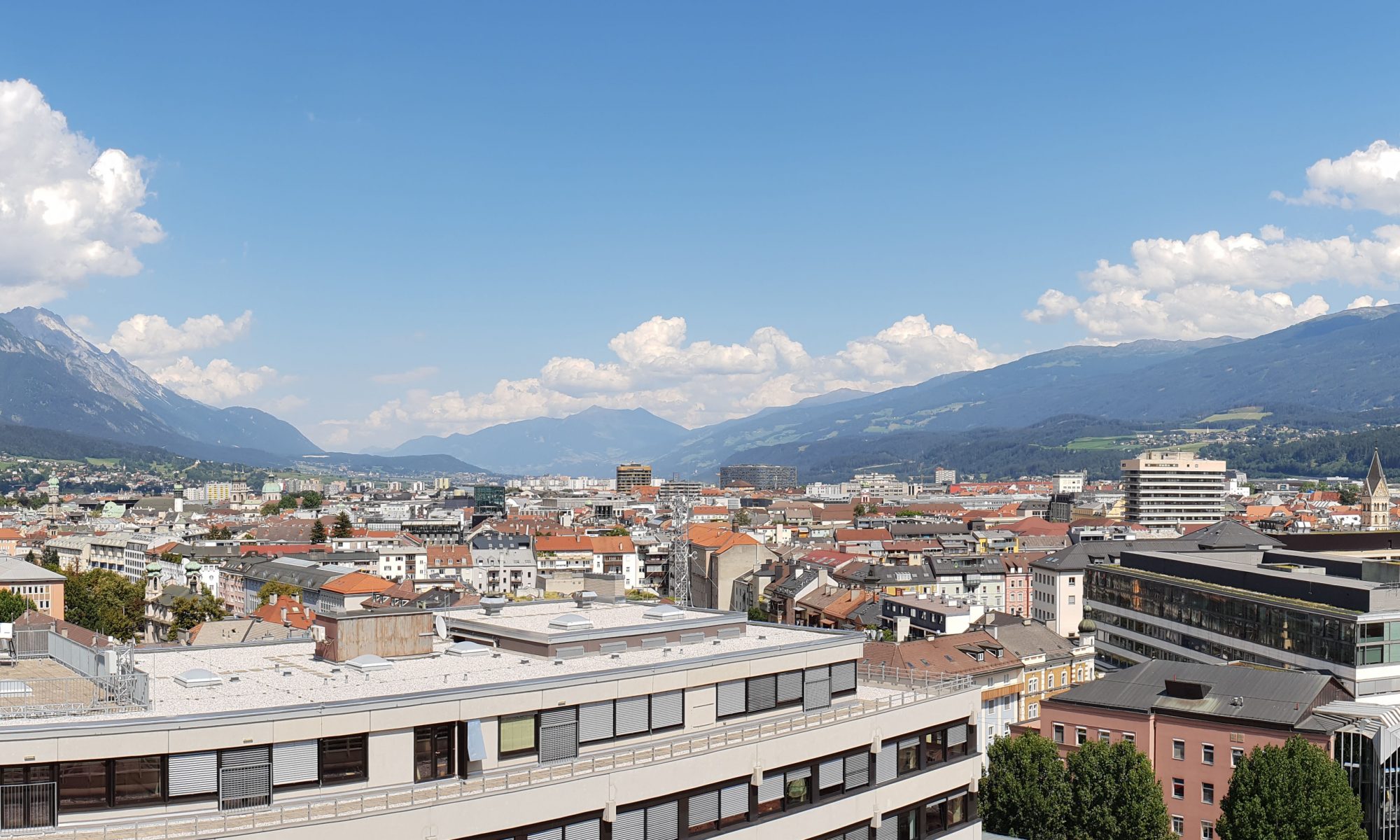
Technological improvements have markedly reduced several aromatic VOCs, carbon monoxide and particulate matter in western Austria. Nitrogen dioxide has not shown the same clear reversal. In cities, nitrogen oxides arise from several combustion sources whose contributions can remain uncertain in emission inventories.
Our observations provide an independent top-down perspective: instead of adding up individual sources alone, we observe the integrated turbulent exchange between the city and the atmosphere.
Top-down emission constraints
Eddy-covariance observations of NO₂, NO, CO₂, methane and reactive organic compounds quantify what a larger urban area actually releases to the atmosphere.
Fast concentration and wind observations
Footprints, wind sectors and source areas
Observations and emission inventories
Observing programme
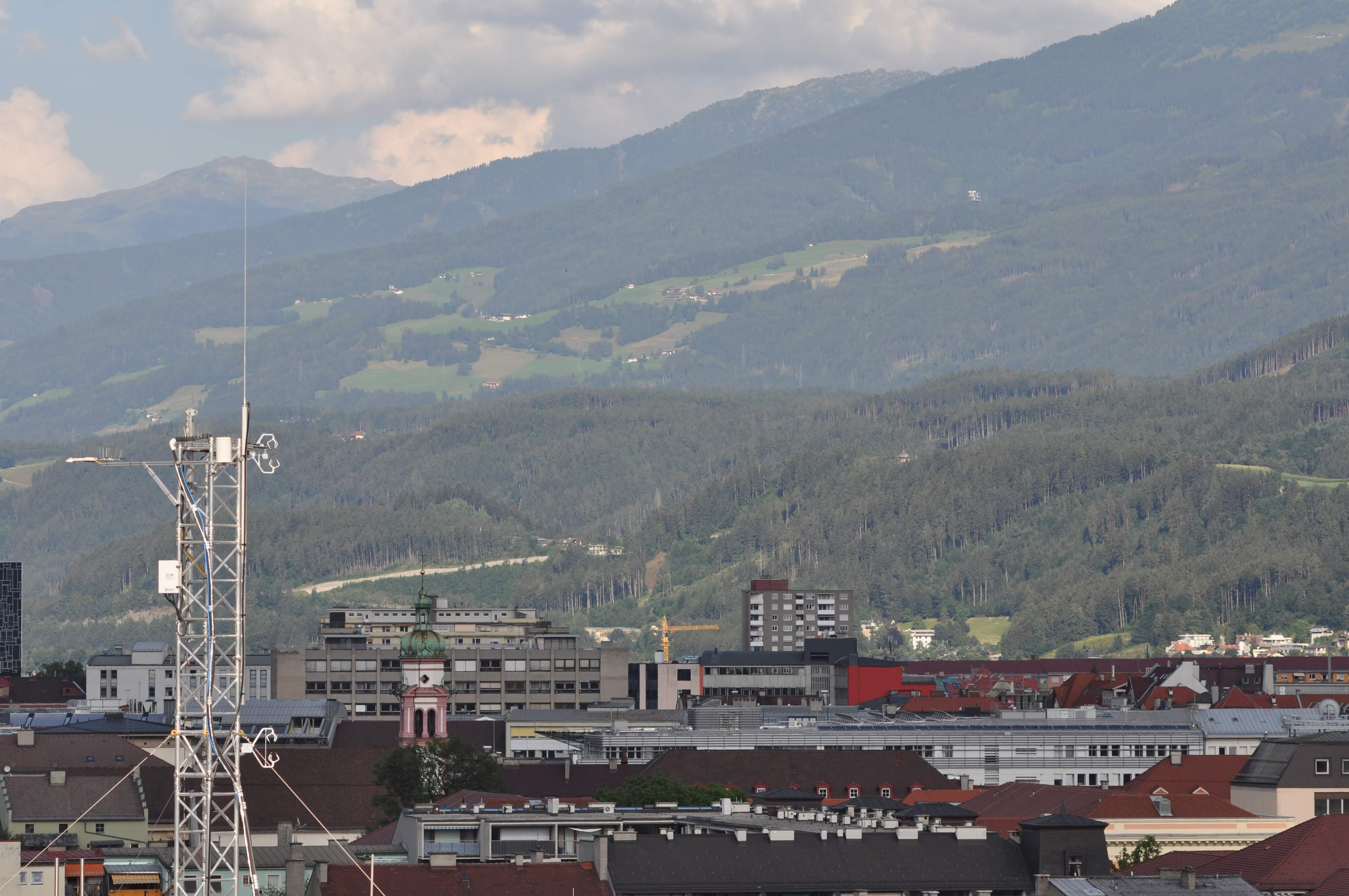
Continuous observations reveal seasonal and long-term changes. Campaigns add instruments, mobile measurements and targeted experiments to resolve individual sources and chemical processes in greater detail.
Multi-year flux and concentration records create a robust urban–Alpine reference dataset.
Additional systems observe trace gases, aerosols, radiation and meteorological processes at the same time.
Differences between observations and inventories reveal unknown or insufficiently quantified urban sources.
Projects & collaboration
Funding: FWF P30600, FWF P33701 and EU Marie Curie 334084.
Doctorateers: Christian Lamprecht, Marcus Striednig and Michael Stichaner.
Collaborations connect the IAO with Niels Jensen and Ignacio Goded at the JRC in Ispra, Donald Lenschow at NCAR, David Gurarie at Case Western Reserve University and Alexander Cede at LuftBlick. This brings together long-term observations, turbulence research, emission inventories, remote sensing and air-quality modelling.
Instruments, projects and publications show how high-frequency signals become robust emission estimates.