VOCentinel at IAO: A New Era of Continuous VOC Monitoring
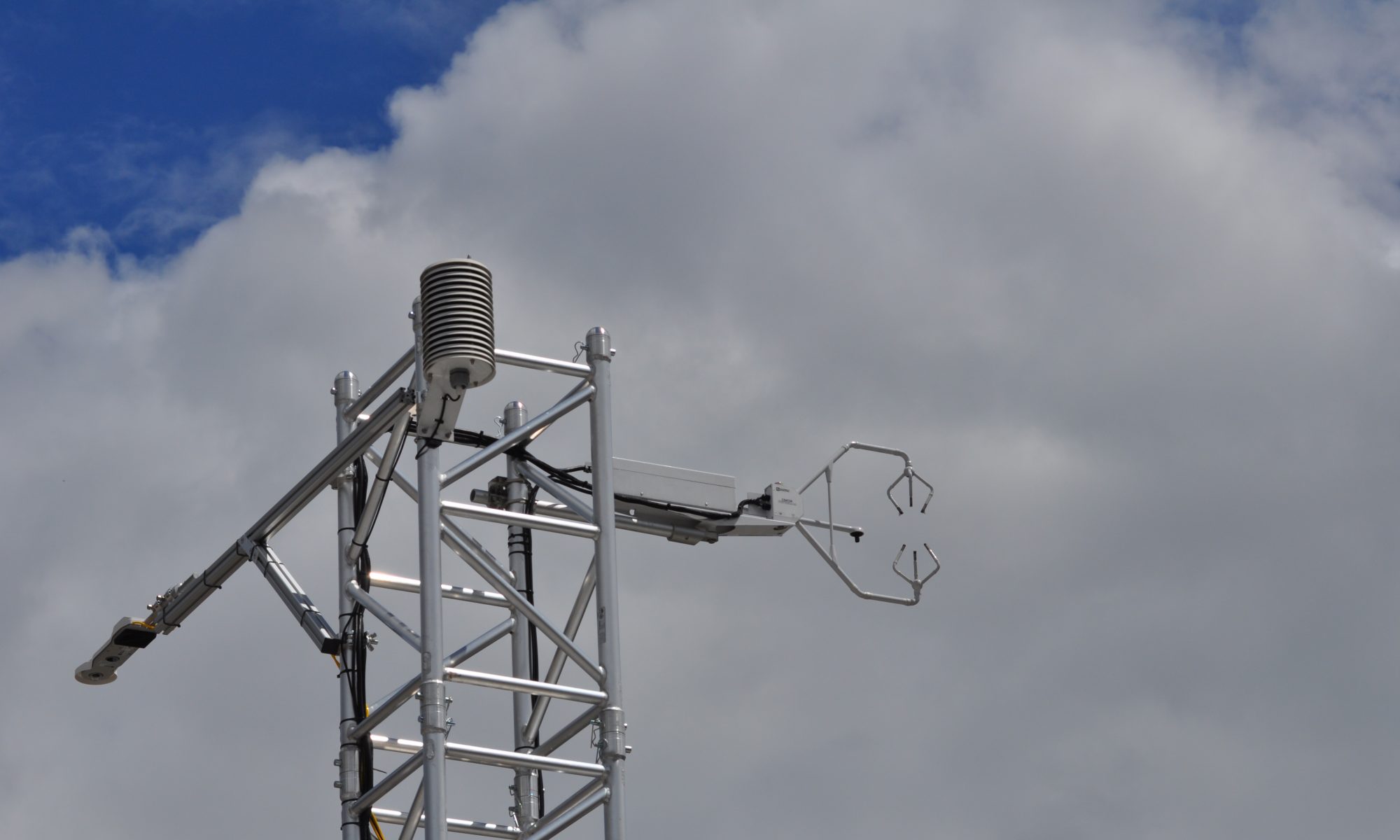
In summer 2025, a prototype of IONICON’s new VOCentinel was successfully deployed at the IAO of the University of Innsbruck, where it is now carrying out its intended mission: the long-term, continuous monitoring of volatile organic compounds (VOCs) in the ambient atmosphere.
The ideal instrument of continuous, hands-off VOC monitoring
Since the establishment in 2014, the IAO has added instrumentation to continuously measure fluxes of methane, and ethane, along with almost a dozen VOC campaigns. However, continuous, high-resolution VOC measurements have historically been too labor-intensive and challenging.
For a while, the Team at IAO was looking for a VOC monitor that reports concentrations of VOCs and automatically handles detector tuning, calibrations, background subtractions, and other data preprocessing. We desired the same functionality as the other online instruments, which are typically dedicated to only one or two trace-gas species.
The key advantage of PTR-MS is that it can detect thousands of VOC species, spanning many orders of magnitude in concentration and volatility. The VOCentinel can now successfully bridge this gap.

Technology from Cleanrooms to the Atmosphere
IONICON’s R&D team has long recognised the challenges associated with continuous VOC monitoring. The company has perfected this task for stringent industrial applications, such as in the semiconductor industry and for cleanroom monitoring. The requirements in this field are rigorous in terms of both reliability and precision, and industry customers do not merely want to collect data; they need real-time actionable information.
To this end, IONICON has developed Automatic Measurement and Evaluation (AME) software that deploys different reagent ions in a cyclic schedule to extract chemical information far beyond simple mass-to-charge ratios of ions. The proprietary pattern-matching algorithm identifies chemical compounds and minimises the risk of false positives due to species interferences. Central software manages operational tasks and data processing. Combined with robust PTR-TOFs featuring a genuine IONICON ion source and drift tube, this constitutes the AME approach.
The Challenge of Ambient Air: Thousands of VOC Species
There is a critical difference between cleanroom air and outdoor air samples that must be considered. The former is pre-cleaned and humidity-controlled, typically containing a known suite of potential contaminants. In contrast, outdoor air is subject to the full swing of meteorological conditions and may contain thousands of VOC species, many unknown.
However, recent technical developments by IONICON, such as the fast-switching Invion source and the Dynamic Humidity Control (DHC), now make it viable to deploy IONICON’s robust AME approach towards the monitoring of VOCs in the ambient atmosphere.

Solving the Isoprene-Aldehyde Conundrum
In urban environments, various intermittent or changing sources of VOCs can make data processing and interpretation difficult. This is often seen when „unthought-of“ compounds interfere at exact masses that have traditionally been associated with a single predominant compound. For example, in urban settings, researchers have demonstrated that a significant portion of the signal at 69.070 m/z – which is widely associated with protonated isoprene – may in fact stem from aldehydes produced by cooking, frying, and other human activities.
This problem can successfully be addressed by chemically distinguishing the aldehydes and other interfering substances from isoprene. This is achievable because the AME scheme, utilizing five distinct ionization modes, provides a characteristic feature for each interfering compound. This allows for their unambiguous identification and quantification within a mixture that includes isoprene, aldehydes, and alcohols. Furthermore, a crucial element of the pattern matching algorithm is its robustness, allowing it to maintain efficacy even against compounds that are unknown or unanticipated.
