
The fourth operational meeting of the European BREATHING project (Best pRacticEs to Adapt to climaTe cHange Interregional approach to reduce urbaN emerGent contamination) took place in Bolzano. This initiative is funded by the Interreg VI-A Italy-Austria Cross-Border Cooperation Program 2021–2027.
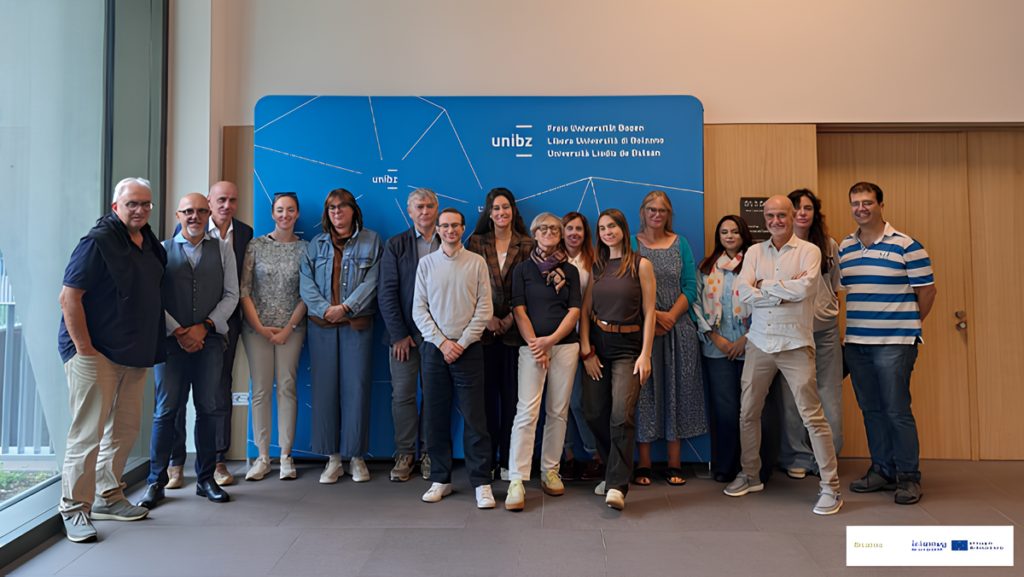
The event brought together representatives from Arpav, serving as the lead partner, along with researchers from Ca’ Foscari University of Venice, the University of Innsbruck, and the Free University of Bolzano, which hosted the event. The day’s proceedings took stock of the scientific progress made and charted the course toward the project’s final phase, which will officially conclude in early March 2027.
The debate centered on analyses of air quality and the impact of climate change in urban and rural areas of the cross-border region. In particular, ARPAV technicians presented the results obtained through atmospheric modeling, focusing on dispersion simulations carried out using specific models and on emission scenarios projected through 2050. The data highlight a trend of gradual reduction in the main primary pollutants, providing a useful framework for estimating air quality in the coming decades.
The analytical component of the project was enriched by contributions from Ca’ Foscari University of Venice and the University of Innsbruck, which shared data from monitoring campaigns conducted in the project’s three pilot cities: Treviso, Belluno, and Innsbruck. These measurements allowed for a more in-depth characterization of the chemical composition and dynamics of fine and ultrafine particulate matter (PM2.5 and PM1) in the various geographical contexts.
Specific attention was also given to mitigation strategies related to agricultural activities. Researchers from the Free University of Bozen-Bolzano presented the results of wind tunnel tests aimed at reducing the airborne drift of agricultural products, along with tests on innovative physical treatments based on the use of ozone and UVC rays. These techniques for reducing the ecotoxicity—that is, the environmental impact—of certain agricultural product residues will offer sustainable and concrete solutions for the future of this sector.
All these elements will be integrated into the final phase of the project as part of an integrated life-cycle assessment and multi-criteria analysis model, designed as a decision-support tool for local authorities.
With the completion of analytical and laboratory activities expected by the end of 2026, the first months of 2027 will be entirely dedicated to developing final recommendations and disseminating the scientific results. The BREATHING project thus reaffirms its role as a fundamental initiative for strengthening regional resilience and guiding environmental policies toward increasingly sustainable development models.